
Introduction
This is a list of the books in my personal library, I haven't read every book here, nor do I own all the books I've read or like, I also don't necessarily like all the books I own.
Atomic Habits: An Easy & Proven Way to Build Good Habits & Break Bad Ones By James Clear
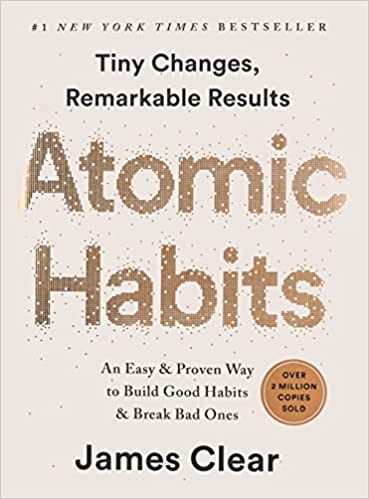
The #1 New York Times bestseller. Over 3 million copies sold!
Tiny Changes, Remarkable Results
No matter your goals, Atomic Habits offers a proven framework for improving--every day. James Clear, one of the world's leading experts on habit formation, reveals practical strategies that will teach you exactly how to form good habits, break bad ones, and master the tiny behaviors that lead to remarkable results.
If you're having trouble changing your habits, the problem isn't you. The problem is your system. Bad habits repeat themselves again and again not because you don't want to change, but because you have the wrong system for change. You do not rise to the level of your goals. You fall to the level of your systems. Here, you'll get a proven system that can take you to new heights.
Clear is known for his ability to distill complex topics into simple behaviors that can be easily applied to daily life and work. Here, he draws on the most proven ideas from biology, psychology, and neuroscience to create an easy-to-understand guide for making good habits inevitable and bad habits impossible. Along the way, readers will be inspired and entertained with true stories from Olympic gold medalists, award-winning artists, business leaders, life-saving physicians, and star comedians who have used the science of small habits to master their craft and vault to the top of their field.
-
Learn how to:
- make time for new habits (even when life gets crazy);
- overcome a lack of motivation and willpower;
- design your environment to make success easier;
- get back on track when you fall off course;
- ...and much more.
Atomic Habits will reshape the way you think about progress and success, and give you the tools and strategies you need to transform your habits--whether you are a team looking to win a championship, an organization hoping to redefine an industry, or simply an individual who wishes to quit smoking, lose weight, reduce stress, or achieve any other goal.
The Subtle Art of Not Giving a F*ck: A Counterintuitive Approach to Living a Good By Mark Manson
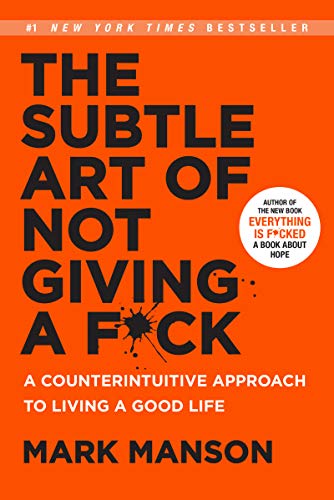
#1 New York Times Bestseller
Over 10 million copies sold
In this generation-defining self-help guide, a superstar blogger cuts through the crap to show us how to stop trying to be "positive" all the time so that we can truly become better, happier people.
For decades, we’ve been told that positive thinking is the key to a happy, rich life. "F**k positivity," Mark Manson says. "Let’s be honest, shit is f**ked and we have to live with it." In his wildly popular Internet blog, Manson doesn’t sugarcoat or equivocate. He tells it like it is—a dose of raw, refreshing, honest truth that is sorely lacking today. The Subtle Art of Not Giving a F**k is his antidote to the coddling, let’s-all-feel-good mindset that has infected modern society and spoiled a generation, rewarding them with gold medals just for showing up.
Manson makes the argument, backed both by academic research and well-timed poop jokes, that improving our lives hinges not on our ability to turn lemons into lemonade, but on learning to stomach lemons better. Human beings are flawed and limited—"not everybody can be extraordinary, there are winners and losers in society, and some of it is not fair or your fault." Manson advises us to get to know our limitations and accept them. Once we embrace our fears, faults, and uncertainties, once we stop running and avoiding and start confronting painful truths, we can begin to find the courage, perseverance, honesty, responsibility, curiosity, and forgiveness we seek.
There are only so many things we can give a f**k about so we need to figure out which ones really matter, Manson makes clear. While money is nice, caring about what you do with your life is better, because true wealth is about experience. A much-needed grab-you-by-the-shoulders-and-look-you-in-the-eye moment of real-talk, filled with entertaining stories and profane, ruthless humor, The Subtle Art of Not Giving a F**k is a refreshing slap for a generation to help them lead contented, grounded lives.
A Thousand Brains: A New Theory of Intelligence By Jeff Hawkins
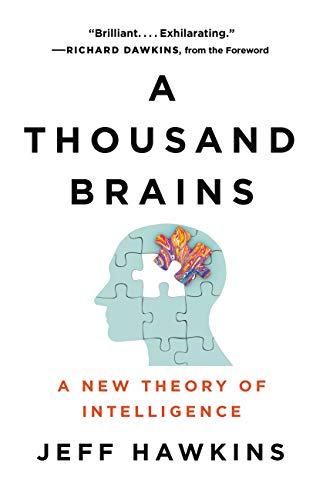
A bestselling author, neuroscientist, and computer engineer unveils a theory of intelligence that will revolutionize our understanding of the brain and the future of AI.
For all of neuroscience's advances, we've made little progress on its biggest question: How do simple cells in the brain create intelligence?
Jeff Hawkins and his team discovered that the brain uses maplike structures to build a model of the world—not just one model, but hundreds of thousands of models of everything we know. This discovery allows Hawkins to answer important questions about how we perceive the world, why we have a sense of self, and the origin of high-level thought.
A Thousand Brains heralds a revolution in the understanding of intelligence. It is a big-think book, in every sense of the word.
Let Us C: Authentic Guide to C PROGRAMMING Language 17th Edition By Yashavant Kanetkar
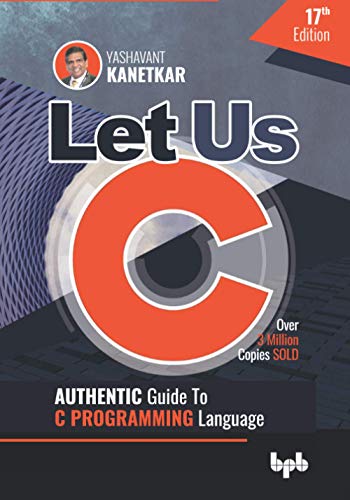
Learn the hand-crafted notes on C programming
-
Key Features
- Strengthens the foundations, as a detailed explanation of programming language concepts are given
- Lucid explanation of the concept
- Well thought-out, fully working programming examples
- End-of-chapter exercises that would help you practice the skills learned in the chapter
- Hand-crafted “KanNotes” at the end of the each chapter that would help the reader remember and revise the concepts covered in the chapter
- Focuses on how to think logically to solve a problem
Description
The new edition of this classic book has been thoroughly revamped, but remains faithful to the principles that have established it as a favourite amongst students, teachers and software professionals round the world. “Simplicity”- that has been the hallmark of this book in not only its previous sixteen English editions, but also in the Hindi, Gujrati, Japanese, Korean, Chinese and US editions. This book doesn’t assume any programming background. It begins with the basics and steadily builds the pace so that the reader finds it easy to handle advanced topics towards the end of the book.
-
what will You learn.
- C Instructions
- Decision Control Instruction , Loop Control Instruction , Case Control Instruction
- Functions, Pointers, Recursion
- Data Types, The C Preprocessor
- Arrays, Strings
- Structures, Console Input/Output, File Input/Output
The Rust Programming Language (Covers Rust 2018) By by Steve Klabnik and Carol Nichols
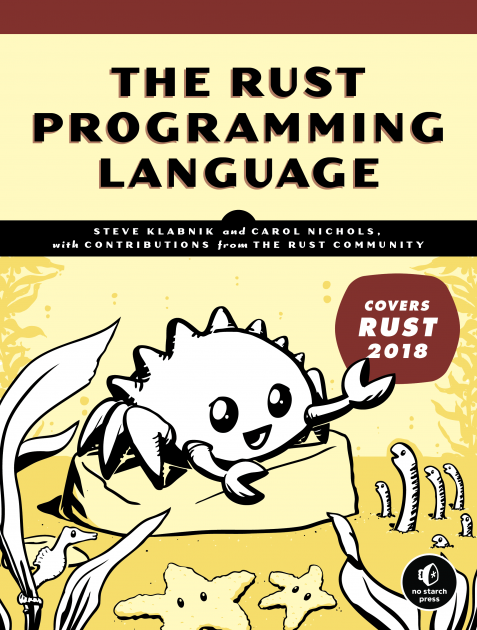
The Rust Programming Language is the official book on Rust: an open source systems programming language that helps you write faster, more reliable software. Rust offers control over low-level details (such as memory usage) in combination with high-level ergonomics, eliminating the hassle traditionally associated with low-level languages.
The authors of The Rust Programming Language, members of the Rust Core Team, share their knowledge and experience to show you how to take full advantage of Rust’s features—from installation to creating robust and scalable programs. You’ll begin with basics like creating functions, choosing data types, and binding variables and then move on to more advanced concepts, such as:
- Ownership and borrowing, lifetimes, and traits
- Using Rust’s memory safety guarantees to build fast, safe programs
- Testing, error handling, and effective refactoring
- Generics, smart pointers, multithreading, trait objects, and advanced pattern matching
- Using Cargo, Rust’s built-in package manager, to build, test, and document your code and manage dependencies
- How best to use Rust’s advanced compiler with compiler-led programming techniques
You’ll find plenty of code examples throughout the book, as well as three chapters dedicated to building complete projects to test your learning: a number guessing game, a Rust implementation of a command line tool, and a multithreaded server.
New to this edition: An extended section on Rust macros, an expanded chapter on modules, and appendixes on Rust development tools and editions.
Why We Sleep: Unlocking the Power of Sleep and Dreams By Matthew Walker
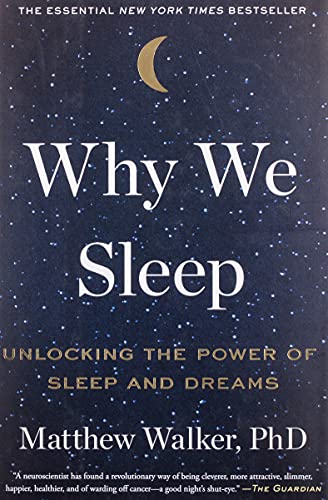
“Why We Sleep is an important and fascinating book…Walker taught me a lot about this basic activity that every person on Earth needs. I suspect his book will do the same for you.” —Bill Gates
A New York Times bestseller and international sensation, this “stimulating and important book” (Financial Times) is a fascinating dive into the purpose and power of slumber.
Sleep is one of the most important but least understood aspects of our life, wellness, and longevity. Until very recently, science had no answer to the question of why we sleep, or what good it served, or why we suffer such devastating health consequences when we don't sleep. Compared to the other basic drives in life—eating, drinking, and reproducing—the purpose of sleep remained elusive.
An explosion of scientific discoveries in the last twenty years has shed new light on this fundamental aspect of our lives. Now, preeminent neuroscientist and sleep expert Matthew Walker gives us a new understanding of the vital importance of sleep and dreaming. Within the brain, sleep enriches our ability to learn, memorize, and make logical decisions. It recalibrates our emotions, restocks our immune system, fine-tunes our metabolism, and regulates our appetite. Dreaming mollifies painful memories and creates a virtual reality space in which the brain melds past and present knowledge to inspire creativity.
Walker answers important questions about sleep: how do caffeine and alcohol affect sleep? What really happens during REM sleep? Why do our sleep patterns change across a lifetime? How do common sleep aids affect us and can they do long-term damage? Charting cutting-edge scientific breakthroughs, and synthesizing decades of research and clinical practice, Walker explains how we can harness sleep to improve learning, mood, and energy levels; regulate hormones; prevent cancer, Alzheimer’s, and diabetes; slow the effects of aging; increase longevity; enhance the education and lifespan of our children, and boost the efficiency, success, and productivity of our businesses. Clear-eyed, fascinating, and accessible, Why We Sleep is a crucial and illuminating book.